
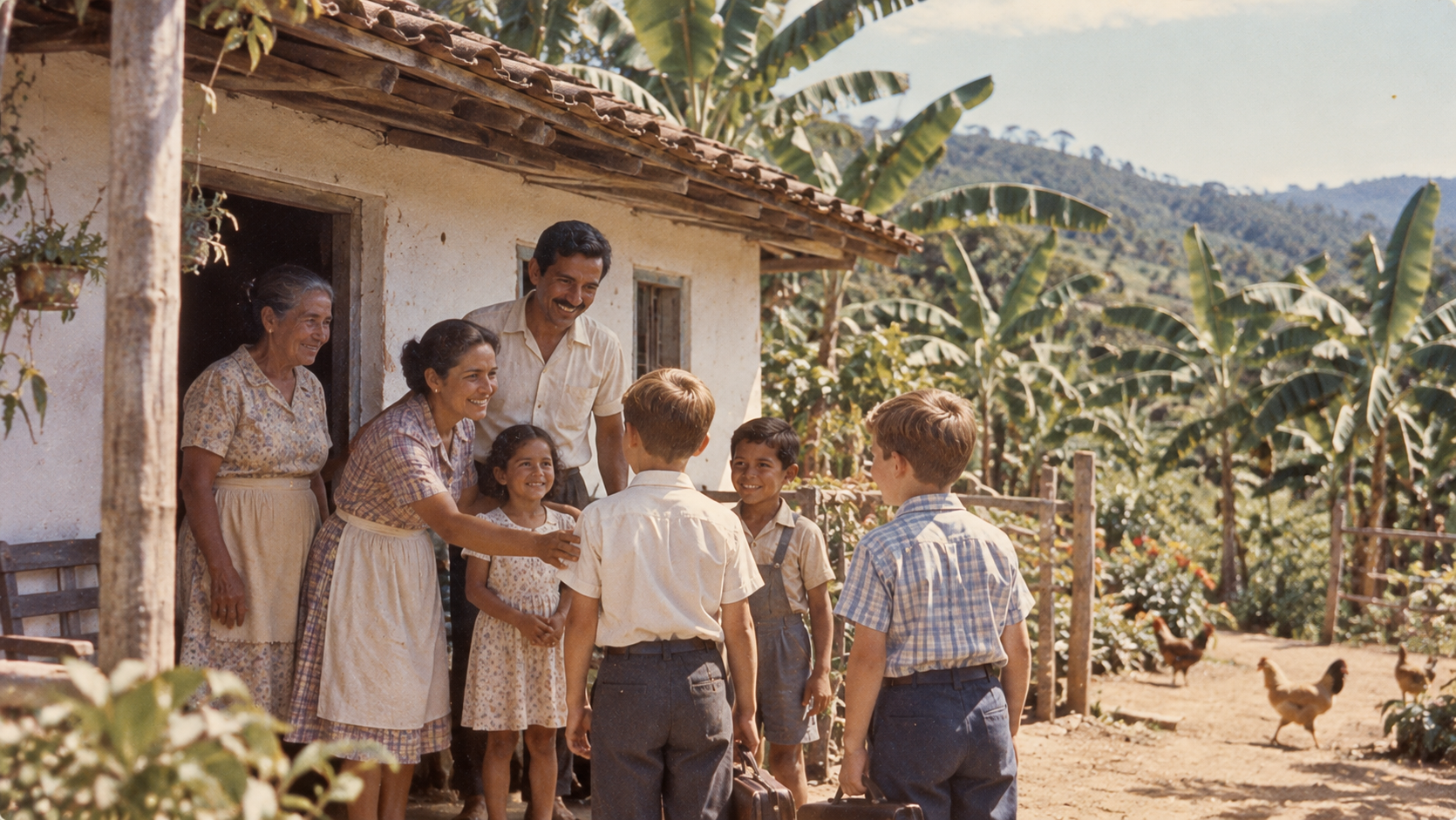
While serving as missionaries in Brazil, Mom, Dad, and the five boys would spend Sundays traveling to small rural churches deep in the countryside. The congregations were made up of families of very modest means, yet they often walked for miles along dusty roads and narrow trails to gather for worship. They came to hear the Gospel, to share fellowship with neighbors, and to enjoy the music performed by the five missionary boys.
The boys became a traveling ensemble of sorts. Their instruments were simple—a trumpet, an accordion, and an assortment of small hand-rung bells—but together they could fill a humble church with joyful hymns. During the week they practiced faithfully, learning to blend their instruments into recognizable melodies that encouraged the congregations they visited.
Many years later, I had the privilege of watching two of those brothers recreate one of their old bell performances. Although decades had passed since they had last played together, their movements returned almost instinctively. Before them was a collection of small handbells arranged in two or three rows, each bell producing a different note. As the melody unfolded, their hands moved constantly from bell to bell, lifting each one between thumb and fingers with quick, practiced motions before setting it back and reaching for the next. Their arms crossed, their hands wove effortlessly around one another, and together they created an intricate dance that was as captivating to watch as it was to hear. Familiar hymns filled the room as though the years between performances had simply melted away. It was a touching reminder of how deeply those missionary years had shaped them.
One of those trips into the countryside came at Christmas.
When the church service ended, another tradition began. Rather than staying together, the boys were divided among the local families. Each family would take one or two boys home, offering whatever food they had and a place to sleep for the night. It was an expression of Christian hospitality, given not from abundance but from generosity.
On that Christmas, two of the boys were assigned to a family who lived a considerable distance from the church. They traveled for hours down rough dirt roads that wound through dense scrub and sprawling banana plantations before finally reaching the family's modest home.
Their hosts welcomed them warmly and showed them where they would sleep.
For the boys, Christmas dinner would not resemble the Christmas table most of us picture today. There would be no table crowded with holiday dishes, no roast or ham at its center, no assortment of familiar sides and desserts. Christmas in this remote corner of Brazil was shaped by what the land provided and by what a family could afford to share.
That evening, the entire meal consisted of bananas.
There was no bread, no meat, no vegetables—only bananas. They were baked, boiled, sliced, and served in every form the family knew. Looking back years later, the brothers would laugh gently at the memory of a Christmas dinner made entirely from a single crop.
But the laughter was never mocking.
They understood that this family had not served them leftovers or an inexpensive meal. They had served them what they had. For people living at the edge of subsistence, sharing even a simple Christmas meal represented genuine sacrifice. Those bananas were an offering of love and hospitality, freely given to strangers who had come to share the Gospel.
It became one of those missionary stories that endured—not because of hardship, but because it taught the boys something they would never forget. On Christmas, far from home, they were welcomed to another family's table by people who had almost nothing, yet freely shared what little they possessed.
Long before the boys were old enough to fully appreciate it, they had witnessed the widow's mite lived out before their eyes.